
❌ “You don’t belong in there.” ❌
? “You need to be more confident and assertive!” ?
? “Aren’t you the Chinatown expert?” ?
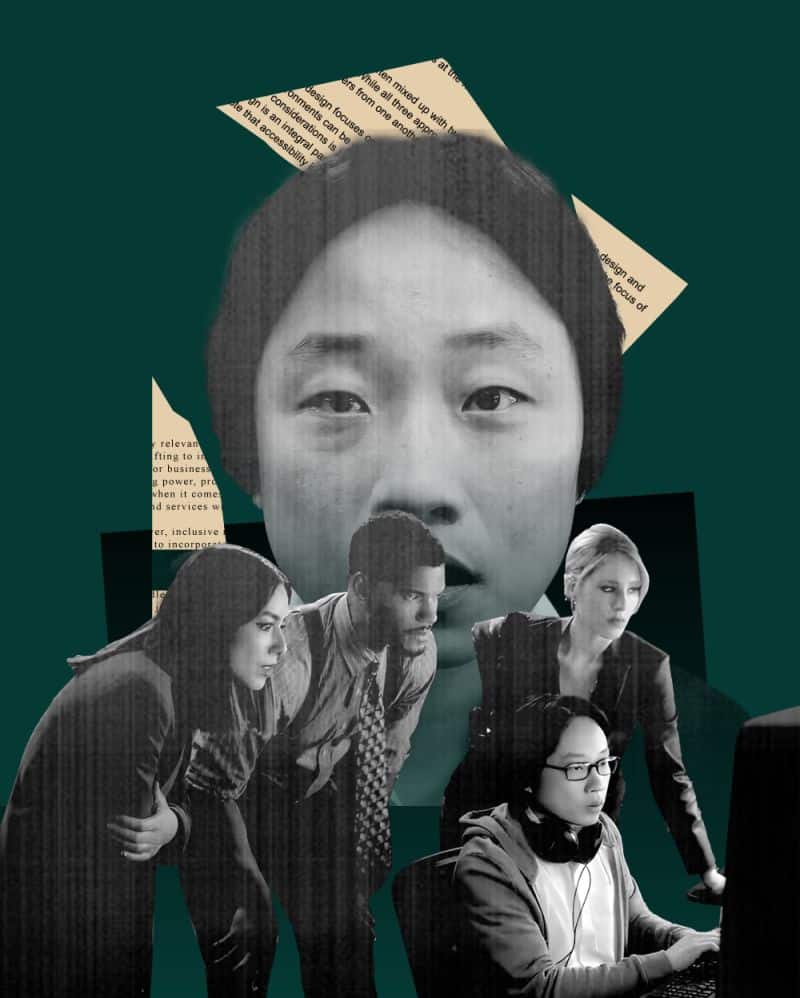
These are 3 very relatable quotes aimed at the Chinese characters in the very self-aware Interior Chinatown series created by Charles Yu (who also wrote the book of the same name).
As per IMDB, Interior Chinatown follows Willis Wu, who “witnesses a crime in Chinatown while working on a TV show. As he investigates, he unravels a criminal web and experiences life in the spotlight he had dreamed of.”
The show has made it very clear that even though the story is about Chinatown and primarily involves Chinese people, these characters still end up being “professional sidekicks” – or even worse – completely overlooked and ignored.
*Mini spoilers – stop here if you haven’t watched past episode 2*
The show expertly and explicitly weaves in the issue with representation in the film industry. In one instance, the lead character Willis, played by Jimmy O. Yang, spends an entire episode being actually invisible to most people whilst trying to enter a police precinct to play his part in solving a murder, but for whatever reason – sometimes supernatural ones(!) – he cannot step inside the building (even after he solves the actual murder!)
At the end of the episode, Willis comes to the realization that he will only be allowed to enter the building if he plays the part everyone expects him to play. So, he decides to don his uniform at the restaurant he works at, and delivers Chinese takeout to the precinct where he is let in instantly.
“This is the way they see me, so this is my way in” he says to himself.
If you haven’t watched the show yet, it’s a must-see not just for the storyline, but for the commentary on diverse representation in the media-sphere – something we at AndHumanity prioritize in all of our work.