
The upcoming regulatory landscape in Canada is potentially moving us swiftly away from passive, “check-the-box” compliance and driving us toward a future built on equity-based design. For business leaders, agency owners, and procurement professionals alike, understanding this evolution isn’t just about staying ahead of policy – it is about actively dismantling systemic barriers to build a truly inclusive economic ecosystem.
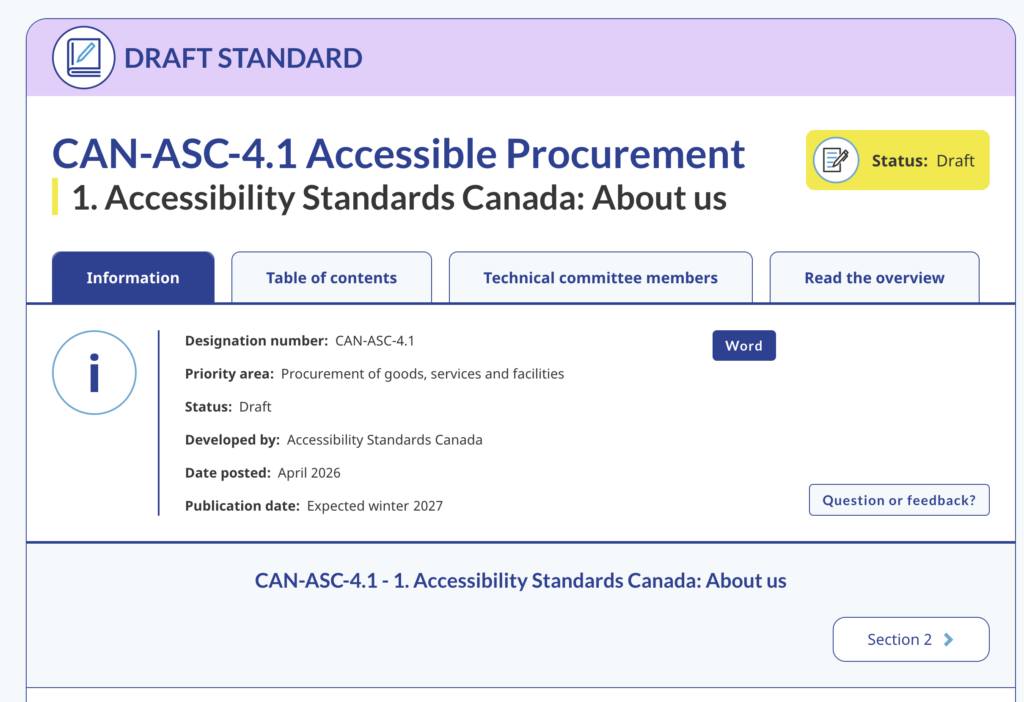
Earlier this year, Accessibility Standards Canada released the draft for CAN-ASC-4.1 Accessible Procurement, with full publication expected in winter 2027. Once finalized, these voluntary standards can be recommended for adoption into official regulation under the Accessible Canada Act.
So… what does this mean for the corporate landscape?
It means a mandate that will require organizations to bake accessibility directly into the planning, bidding, and contract management phases of procurement.
One of the most important clauses indicates that bidders will be allowed to itemize the costs needed to accommodate themselves or their employees during the contract, and these costs cannot be factored into the evaluation of the financial proposal.
This completely levels the playing field for businesses owned by or employing persons with disabilities, ensuring they are no longer out-priced simply for operating accessibly. And if a project excludes accessibility criteria entirely, it will require a signed, mandatory written justification file.
Ultimately, potential shifts like this where we embed equity into our supply chain does more than just prepare us for future legislation; it unlocks the full potential of diverse talent and innovation that has been sidelined for far too long. By treating accessibility as a fundamental design principle rather than an operational afterthought, we create a business landscape where excellence – not accommodation costs – determines success. As we move closer to these new benchmarks, the choice before us is clear. We can wait for regulations to force our hands, or we can choose to be the architects of a fairer, more competitive market today.
So to all you agency owners and business leaders, this is your cue to start moving away from passive compliance, and instead, start moving toward active, intentional and accessible design. You won’t regret it.
Read more on the draft here.
Learn more about what we do and who we do it for on our services page.
Sign up for our newsletter here for more insights on marketing, advertising, communications, and how the industry intersects with inclusion.