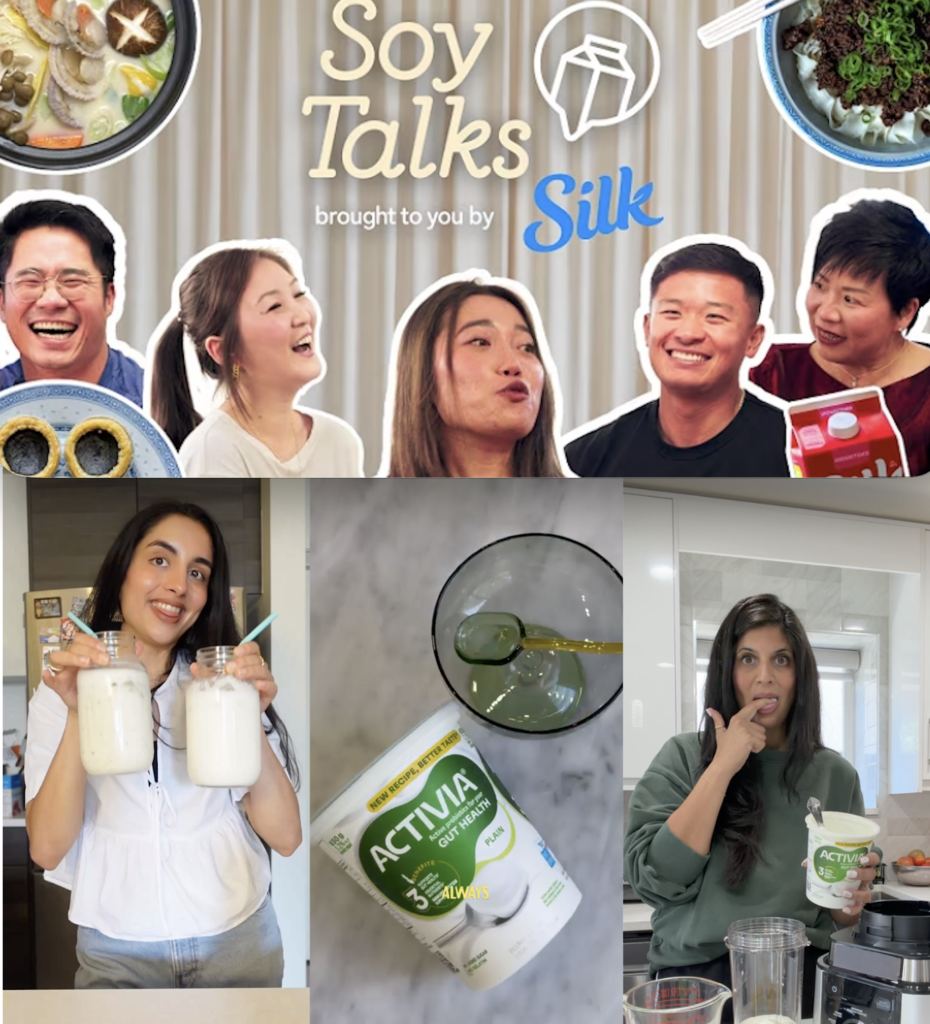

At AndHumanity, we believe real resonance isn’t accidental – it’s engineered. Over this past year, we had the privilege of partnering with Danone Canada on our first projects together to bring that philosophy to life across two culturally grounded campaigns: SoyTalks for Silk Soy and Activia at Home for Activia Yogurt.
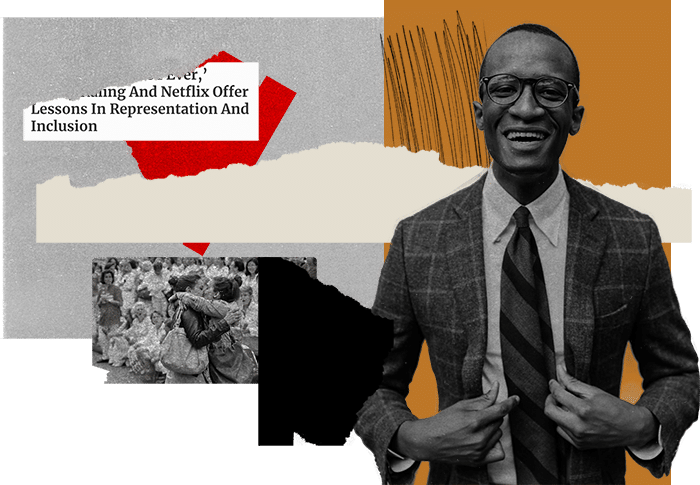
Recently, three of Canada’s premier industry publications – Strategy, Campaign Canada, and Marketing News Canada – spotlighted how both campaigns moved beyond surface-level representation to authentically connect with the New Diverse Mainstream. Here is a look at what the press is saying and the thinking behind the work.
1. Honouring Inherited Knowledge
Inclusive marketing often stumbles when brands enter a community assuming they are the teachers. In Strategy, writer Laurie Wilson noted that telling South Asian Canadians about the digestive benefits of probiotic yogurt risked overlooking a truth families have understood for generations. As our Co-Founder and Managing Director, Tammy Tsang, explained in the piece:
“To go in and tell them, ‘This is important,’ was kind of sidestepping the fact that this culture had so much history with yogurt and dahi already.”
Whether it’s South Asian families making raita, lassi, and chaas, or Chinese-Canadian households with firm standards for fresh doujiang, communities already hold deep culinary wisdom. Our role is to act as guardians of cultural integrity – showing how a product naturally complements existing rituals without trying to rewrite or replace them. Campaign Canada highlighted that exact approach in Activia at Home, quoting Tammy on how the work positioned Activia alongside the dahi families already love:
“Our strategy does not attempt to introduce gut health to this community; it honours what families have already inherited from generations before them.”
2. High-Trust Voices vs. Celebrity Reach
In today’s age where audiences are bombarded with advertisements every day, relevance beats raw reach every time. Both Strategy and Campaign Canada zoomed in on our creator strategy for Activia at Home, where focus group research led by South Asian strategists revealed that 1.5 and second-generation South Asian Canadians are eager to reconnect with their heritage through food. More importantly, they are far more receptive to word-of-mouth recommendations from relatable community members than polished celebrity ads.
Speaking to Strategy about why we partnered with nine nano- and micro-creators, Tammy shared:
“People are constantly bombarded and being sold by celebrities. A lot of micro influencers have their own following. They treasure their followers because they feel that they can lose them. It’s new and it’s a smaller community.”
Because smaller creators fiercely protect the trust they’ve built, they only share recipes and rituals they genuinely use in their own kitchens. In Campaign Canada, Tammy noted that social was the natural home for this storytelling “because traditional advertising is often ignored by this savvy audience, and because word of mouth matters so much in how this community shares food and health knowledge.” By pairing their authentic voices with a phased, two-wave rollout and paid amplification via WPP, we gave each story space to breathe – sparking comment sections filled with shared family memories rather than passive impressions.
3. Inclusion Happens Before the Camera Turns On
Across all three features, one core truth stood out: diversity on screen means very little if the strategy behind it is built on assumptions. You cannot authentically speak to the New Diverse Mainstream if lived experience isn’t at the decision-making table from day one.
In Marketing News Canada, writer Shaniece MacNeil explored how both SoyTalks and Activia at Home began with open-ended community listening before a brief was ever finalized. For SoyTalks, that research led us to swap a traditional out-of-home buy for an unscripted video podcast table featuring Chinese-Canadian home cooks, creators, and an elder. As Tammy told Marketing News Canada:
“Brands assume inclusion is what’s on screen, but it’s decided earlier in the research, strategy and planning. Each step where erasure creeps in whittles inclusion down to imagery.”
She reinforced this in Strategy, emphasizing that treating any community as a monolithic group is where multicultural campaigns fail:
“True, authentic representation comes from the very base up. It’s the research that you do, the strategy that you do, the creative that you do.”
At AndHumanity, we embed team members and strategists who share the lived experience of the communities we’re reaching across every phase – from research to creative development and creator management. When you invest in building trust before pushing a hard sell, your brand doesn’t just show up in a culture – it earns a seat at the table.
Learn more about what we do and who we do it for on our services page.
Sign up for our newsletter here for more insights on marketing, advertising, communications, and how the industry intersects with inclusion.