
The death of the “Mad Men” advertising playbook is here.
For decades, marketing and advertising operated on a single, ruthless psychological mechanism: manufacturing a deficit. Legacy agencies sold an unattainable archetype, systematically sparked a feeling of inadequacy in the consumer, and promised that buying a specific product would heal that wound. It was a cycle of engineered insecurity followed by a commercial cure – deliberately built on exclusionary standards that left vast majorities of the population feeling invisible or flawed.

Now, the landscape has fundamentally shifted. Modern consumers are demanding better from the brands they let into their lives. They no longer buy products to escape an inadequacy or chase an impossible fantasy. Instead, cultural momentum is moving toward radical self-acceptance, authenticity, and intentional inclusion. Consumers want brands that acknowledge, respect, and truly reflect who they already genuinely are. The future belongs to the brands that practice inclusive marketing to meet people exactly where they are – that is the new marketing playbook.
The Mechanics of the Manufactured Deficit
To understand why the old playbook is failing, we have to look at how it was built. Traditional advertising relied on creating an artificial gap between who the consumer was and who they “should” be. Whether it was a flawless supermodel, an impossibly pristine home, or a symbol of elite status, the message was clear: You are incomplete, but this product will fix you. This model thrived on homogeneity, deliberately erasing diverse body types, ethnicities, abilities, and identities to protect a narrow, corporate-defined standard of perfection.
This deficit-based marketing relied on a few predictable, exclusionary pillars:
- The Aspirational Trap: Showcasing lifestyles, skin tones, and bodies that 99% of the population could never achieve, casting marginalized groups aside.
- Shame as a Catalyst: Subtly suggesting that aging, body diversity, neurodivergence, financial normality, or emotional vulnerability were problems to be solved.
- The Illusion of Completion: Selling the lie that happiness, confidence, and belonging could be purchased off a shelf, rather than cultivated through acceptance.
While this approach drove billions in revenue during the 20th century, it came with a hidden cost: consumer burnout and deep societal alienation.
The Cultural Shift Toward Radical Self-Acceptance
What changed? The modern consumer grew up. Aided by the democratization of media and a deeper understanding of diversity, audiences developed higher cultural competencies and literacy for marketing manipulation. They began to see through the airbrushing, the engineered anxieties, and the rigid lack of representation.
More importantly, a massive cultural counter-movement took root. Instead of trying to fit into a corporate-defined mold, people began embracing their true selves. For instance, data from the Ernst & Young Gen Z Study shows that over 90% of Gen Z consumers place authenticity and being true to oneself among their highest personal values. They completely reject superficial perfectionism, expecting authentic inclusion and a baseline sense of belonging from day one.
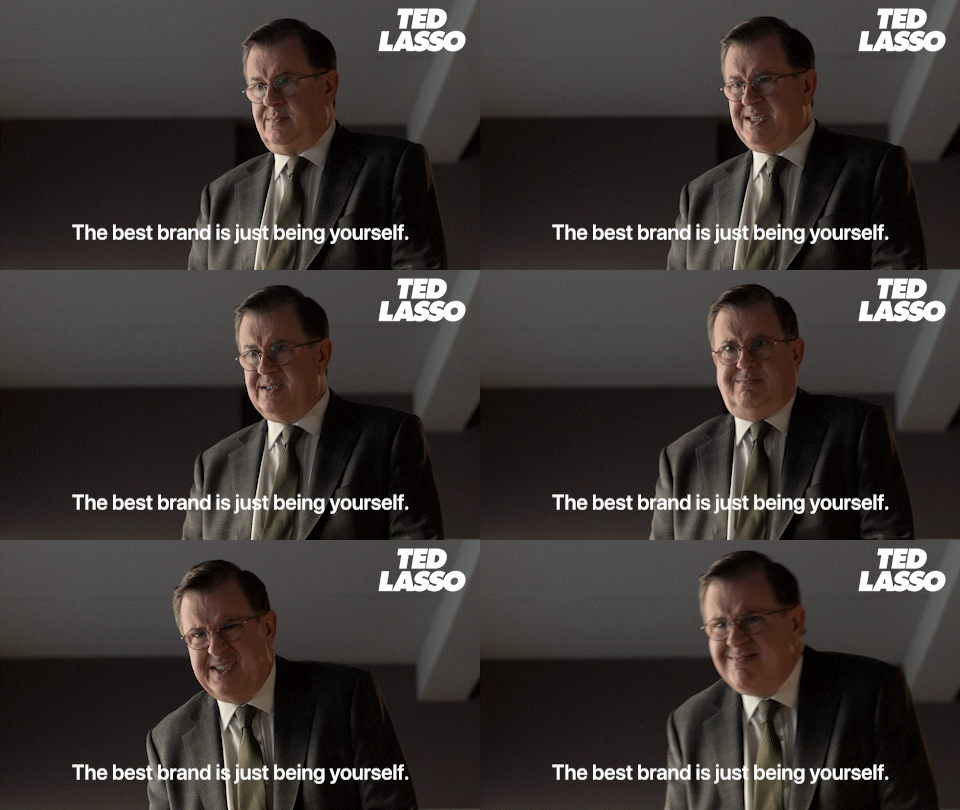
This shift is characterized by:
- Celebrating Nuance: Swapping out the one-size-fits-all archetype for real, diverse, and messy human experiences.
- Prioritizing Mental Well-being: Rejecting the anxiety-inducing narratives that suggest constant optimization or assimilation is required to be worthy of happiness.
- Demanding True Representation: Valuing brands that actively showcase a wide spectrum of backgrounds, abilities, genders, and sizes as they exist in the real world.
When consumers stop believing they are broken, advertising that tries to fix them ceases to work.
The New Playbook: Mirroring through Inclusive Marketing
The brands thriving today have abandoned the deficit model entirely. They do not look down at the consumer from an exclusionary pedestal; they stand beside them. The new playbook is built on validation, representation, and genuine partnership.
This isn’t just a moral imperative; it’s a critical commercial driver. According to the comprehensive Kantar Brand Inclusion Index, an overwhelming 75% of consumers globally state that a brand’s diversity and inclusion reputation directly influences their buying choices. Additionally, joint research from the Unstereotype Alliance and Oxford University found that progressive, inclusive advertising drives a sales uplift of over 16% compared to less progressive, legacy content.
Winning brands understand that their role is to enhance the consumer’s life, not define their worth. This requires a complete rewiring of creative strategies through an inclusive lens:
- From Aspiration to Validation: Instead of showing consumers who they should be, brands must mirror back who they actually are, celebrating their real identities, intersectional struggles, and triumphs.
- From Perfection to Vulnerability: Audiences connect with brands that ditch the clinical, elitist voice to speak with human empathy, acknowledging that life is diverse and non-linear.
- From Tokenism to Core Strategy: True inclusive marketing isn’t about checking a box in a single campaign. It means embedding equity into product design, accessibility features, and long-term brand strategy.
The old “Mad Men” playbook relied on making people feel small and excluded so they would buy big, while the new playbook relies on making people feel seen, valued, and safe so they stay loyal.
The era of manufacturing deficits is over, and the era of radical empathy and intentional inclusion has officially begun.
Learn more about what we do and who we do it for on our services page.
Sign up for our newsletter here for more insights on marketing, advertising, communications, and how the industry intersects with inclusion.