
K-beauty has been part of my routine for years. Essences, serums, etc. – they’ve all sat quietly on my shelf while I’ve done my inclusive marketing work in a completely different lane. So when I read a recent CNN article about K-beauty “finally embracing inclusion,” it wasn’t just interesting, it felt uncomfortably familiar. The story wasn’t new; it was the beauty version of a pattern we see in almost every industry that benefits from global audiences without fully seeing global people.
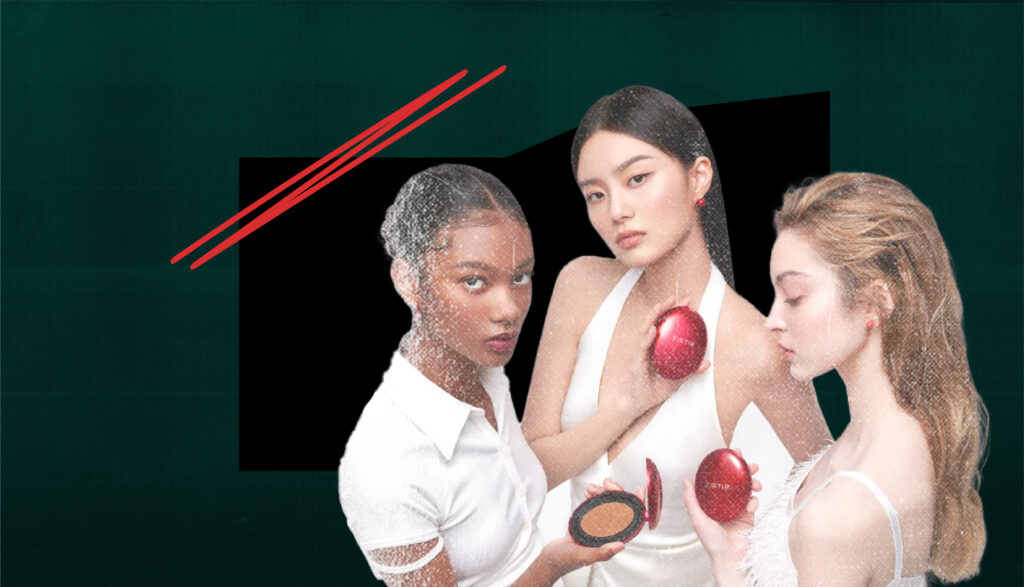
For a long time, “K-beauty” travelled the world with a very narrow vision. The products moved, but the ideals didn’t. Fair, poreless, slim, youthful – a tight little box packaged as “aspirational.” And as the industry expanded beyond Korea, the definition of who it was really for didn’t expand at the same pace. Shade ranges nudged a bit darker, a few more faces of colour appeared in campaigns, and brands talked about “going global.” But if you looked closely at who was centered – whose features, skin histories, and lived experiences were treated as the norm – the dominant lens was still firmly in charge.
This is where inclusion often gets misunderstood, in beauty and beyond. Inclusion isn’t “add more people into the same old frame.” Inclusion is: question the frame. Who decided what “good skin” looks like? Who gets called “radiant” versus “too dark,” “too textured,” “too old”? Who has to mix three foundations to find their match while being told the brand “serves everyone”? When we only tweak the surface – a broader shade card here, a plus-size model there – but keep the underlying ideal intact, we’re not disrupting anything. We’re just decorating exclusion.
So yes, it’s encouraging to see K-beauty brands start to move. More undertones. More visible diversity. More stories that acknowledge acne, scars, age, and difference. That matters. But it’s also a reminder: representation is only step one. Real progress is when the very idea of what’s “beautiful” starts to be rewritten – when deeper skin isn’t framed as an exception, when disability and neurodivergence are considered in product design and storytelling, when older faces aren’t treated like a problem to be solved but part of the community to be served.
In the work I do, I’m not interested in helping brands “catch the inclusivity trend.” I’m interested in helping them see where they’ve been defaulting to the dominant lens, often without realizing it – and then do the slower, more honest work of shifting it. That means asking harder questions in briefing rooms, inviting in people who’ve never been in those rooms, and accepting that “everyone” has never truly meant everyone. In beauty or in any industry, inclusion can’t just live in the campaign. It has to live in what – and who – you decide is worth designing for in the first place.
Learn more about what we do and who we do it for on our services page.
Sign up for our newsletter here for more insights on marketing, advertising, communications, and how the industry intersects with inclusion.