
Truly inclusive creative practices grow from intention, cultural understanding, and equitable collaboration. Here are six ways to embed inclusive strategies into your creative process and workplace culture:
1. Addressing Creative Team Power Dynamics
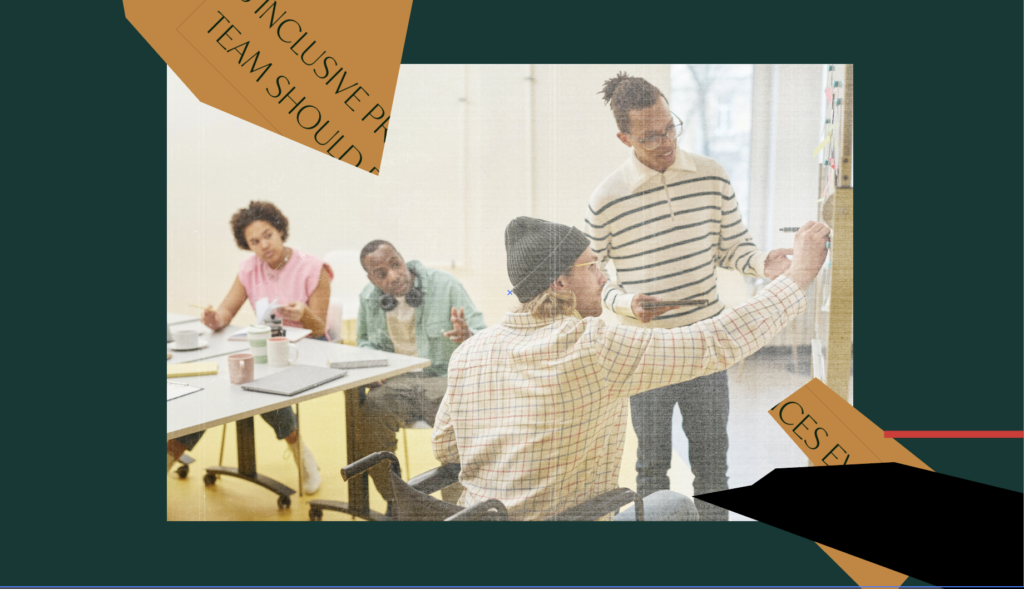
Creative workplaces often lean on subjective feedback and personal taste, which can unintentionally give more weight to voices with positional power or privilege. To design equitable ideation processes, intentionally structure sessions that elevate the contributions of equity-deserving participants. This includes offering multiple forms of input – like anonymous submissions or asynchronous collaboration tools – to mitigate biases and ensure every idea has a fair chance to lead.
2. Building Cultural Literacy and Competency
Inclusive creativity starts with learning before creating. Every member of a creative team should have the necessary literacy in the histories, contexts, and stories of the communities they’re trying to appeal to. This ongoing education ensures that the work moves beyond representation and into deep, meaningful, and authentic storytelling. When teams approach campaigns with awareness and contextual understanding, they unlock creativity rooted in respect rather than assumption.
3. Creating Not Only Safe, but Brave Spaces
Safe spaces are essential – they prioritize comfort, trust, and belonging for every contributor. But brave spaces take this a step further. They encourage dialogue across different lived experiences and perspectives, embracing the tension that sparks innovation. Brave spaces empower team members to challenge conventional narratives, knowing that their professional environment rewards the courage to think differently.
4. Going “Deep, Not Wide”
A common misconception is that culturally specific creative only resonates within the focus community being represented in the creative. Research and experience prove the opposite – deep, nuanced stories connect universally because authenticity transcends boundaries. By focusing on “deep stories,” we craft creative that is emotionally resonant for its intended audience while remaining engaging and insightful for all viewers.
5. Designing Counter-Stereotypical Creative
Counter-stereotypical creative is not only socially responsible – it’s effective. It’s the kind of content that makes audiences pause mid-scroll because it disrupts expectations. By deliberately flipping tired narratives and visual clichés, you can create work that is both bold and memorable. In doing so, you break patterns of bias and tell stories that reflect real diversity and humanity.
6. Avoiding Tokenization with “The Replacement Test”
Representation is more than assembling a diverse cast – it’s about depth and cultural integrity. The simple “replacement test” for commercials (coined by our agency) helps assess whether a script is truly inclusive or merely tokenistic and performative. Here’s the test; if your protagonist can be swapped with someone from any other community without changing the rest of the script and story, then there is no deep cultural nuance affecting the story. It’s likely a blanket approach based on assumed “universal truths”.
To be clear, truly inclusive creativity is not a checklist – it’s a continuous practice of listening, unlearning, and co-creating. But by embedding these principles into your process, your team will not only begin to produce more equitable creative, but also more imaginative, impactful, and lasting work.
Learn more about what we do and who we do it for on our services page.
Sign up for our newsletter here for more insights on marketing, advertising, communications, and how the industry intersects with inclusion.